

More than half of british small and medium enterprises have switched to internet-based telephony, unlocking major cost savings and greater flexibility. As traditional phone systems are phased out across the United Kingdom, understanding VoIP is now critical for staying connected and competitive. This guide gives IT managers a clear overview of what VoIP means for british business operations, spotlighting key features, deployment options, and practical tips for making smart decisions in a changing communications landscape.
Table of Contents
- VoIP Telephony Defined For Modern Businesses
- Types Of VoIP Systems: On-Premises And Cloud
- How VoIP Telephony Works And Key Features
- Security, Data Protection, And UK Regulations
- Cost Considerations, Risks, And Alternatives
Key Takeaways
| Point | Details |
|---|---|
| Communication Transformation | VoIP enables businesses to transition from traditional telephony to internet-based communication, enhancing flexibility and reducing costs. |
| Deployment Models | Companies can choose between on-premises and cloud-based VoIP systems, each offering distinct advantages tailored to specific needs. |
| Essential Features | VoIP offers advanced features such as automatic call routing and video conferencing, promoting efficient communication strategies. |
| Security Compliance | Strong security measures, including encryption and regular audits, are critical for protecting VoIP systems in accordance with UK regulations. |
VoIP Telephony Defined for Modern Businesses
Voice over Internet Protocol (VoIP) represents a transformative communication technology enabling businesses across the United Kingdom to transmit voice conversations through internet connections rather than traditional telephone networks. As the Public Switched Telephone Network (PSTN) prepares for shutdown in 2027, VoIP emerges as the definitive future of business telecommunications, offering unprecedented flexibility and technological sophistication.
At its core, VoIP converts analogue voice signals into digital data packets, allowing seamless communication across multiple devices including desk phones, smartphones, tablets, and computers. Unlike legacy telephony systems, modern businesses can leverage internet-based communication with significantly reduced infrastructure costs and enhanced operational capabilities. This technology supports businesses of all sizes, from small start-ups to large enterprises, by providing scalable communication solutions that adapt to dynamic workplace requirements.
The key advantages of VoIP telephony extend far beyond simple cost savings. Businesses gain robust features such as automatic call routing, voicemail-to-email transcription, video conferencing integration, and global call management capabilities. These sophisticated tools enable more responsive, interconnected workplace communication strategies that transcend traditional telephony limitations. Moreover, VoIP systems offer superior mobility, allowing employees to maintain professional communication channels regardless of physical location, a critical consideration in today’s increasingly remote and distributed work environments.
Pro tip: When transitioning to VoIP, conduct a comprehensive network assessment to ensure your internet infrastructure can support high-quality voice data transmission without compromising call clarity or reliability.
Types of VoIP Systems: On-Premises and Cloud
Businesses exploring Voice over Internet Protocol (VoIP) technologies have two primary system deployment models to consider: on-premises and cloud-based solutions. Different VoIP deployment strategies offer unique advantages tailored to specific organisational requirements, infrastructure capabilities, and strategic communication objectives.
On-premises VoIP systems represent the traditional approach, where businesses purchase and maintain their own telecommunications hardware and infrastructure directly within their physical premises. This model provides maximum control and customisation, allowing IT teams to configure network settings, integrate with existing systems, and manage security protocols internally. However, on-premises solutions typically demand significant upfront capital investment, require specialised technical expertise for maintenance, and necessitate ongoing hardware upgrades to remain technologically current.

Cloud-based or hosted VoIP systems, by contrast, represent a more flexible and scalable communication approach. Service providers manage all technical infrastructure, allowing businesses to access advanced telephony features without substantial internal technology investments. These solutions offer rapid deployment, automatic system updates, built-in redundancy, and predictable monthly subscription costs. Small to medium enterprises particularly benefit from cloud VoIP’s ability to scale communication capabilities quickly in response to changing business dynamics, without requiring complex infrastructure modifications.
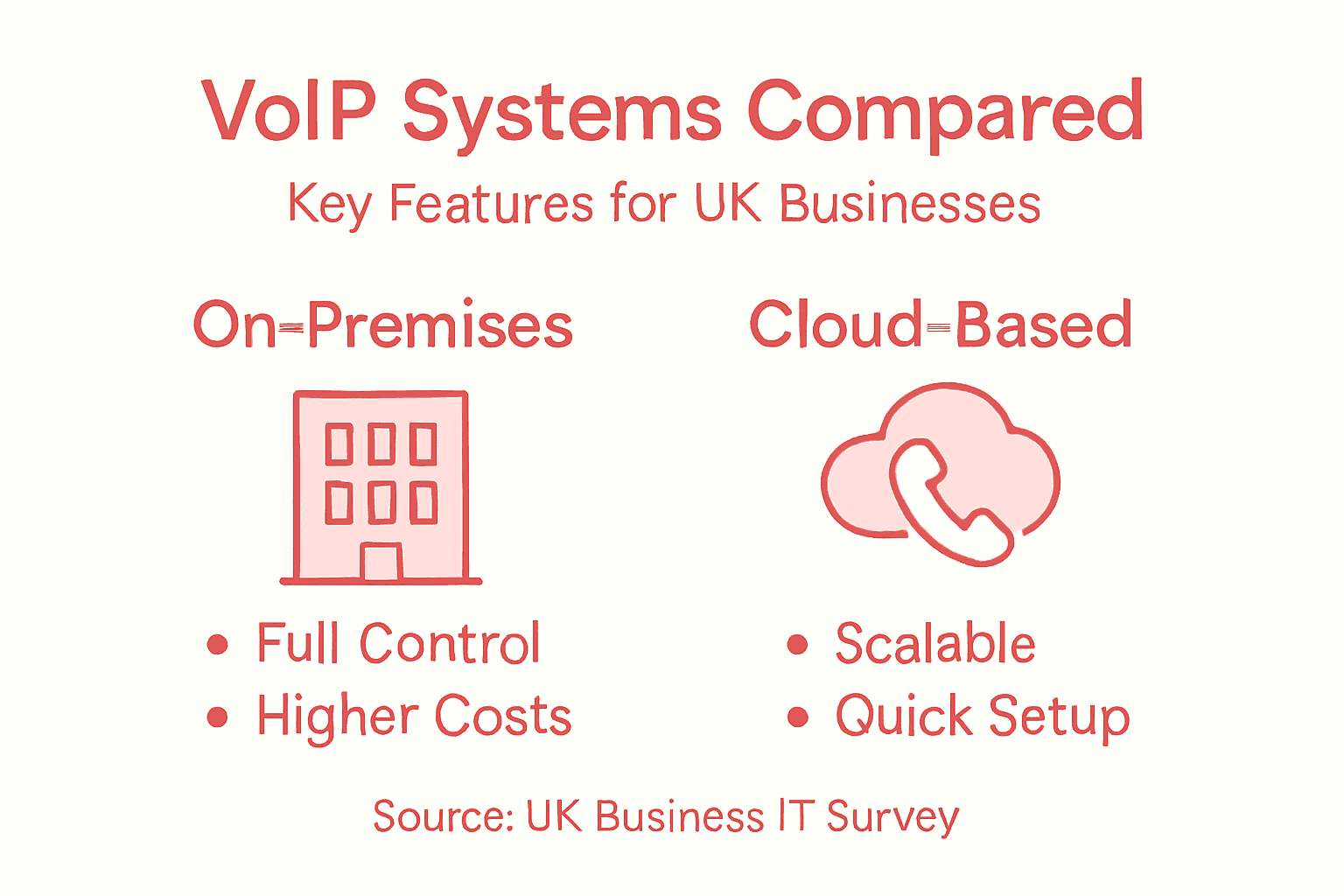
Below is a comparison of on-premises and cloud-based VoIP system attributes relevant for UK businesses:
| Attribute | On-Premises VoIP | Cloud-Based VoIP |
|---|---|---|
| Infrastructure Ownership | Managed in-house | Hosted by provider |
| Upfront Costs | High hardware investment | Low with subscription fees |
| Scalability | Requires manual upgrades | Instantly adjustable |
| Maintenance | Internal IT required | Vendor handles updates |
| Security Control | Managed internally | Shared responsibility |
Pro tip: Before selecting a VoIP system, conduct a comprehensive audit of your current communication infrastructure, bandwidth capacity, and future growth projections to determine the most suitable deployment model.
How VoIP Telephony Works and Key Features
VoIP telephony transforms traditional communication by converting voice signals into digital data packets transmitted seamlessly over internet connections. Voice communication technology operates through a sophisticated process of digital transformation, enabling businesses to communicate with unprecedented flexibility and efficiency.
The technical mechanism behind VoIP involves complex packet switching technology. When a user initiates a call, their voice is immediately converted into digital data packets. These packets are then transmitted across internet networks, routed through various servers and switches, and reassembled at the recipient’s end to recreate the original audio signal. This process occurs almost instantaneously, creating a communication experience virtually indistinguishable from traditional telephone systems. Unlike conventional telephony, VoIP allows businesses to integrate voice communications with multiple digital platforms, supporting communication across computers, smartphones, tablets, and dedicated IP phones.
Key features of VoIP telephony extend far beyond basic voice transmission. Modern systems offer advanced capabilities such as automatic call routing, voicemail-to-email transcription, video conferencing integration, and seamless customer relationship management (CRM) system connections. These sophisticated tools enable businesses to create more responsive, interconnected communication strategies. Organisations can leverage features like call forwarding, multi-device accessibility, and advanced analytics to enhance operational efficiency and support remote working environments.
Pro tip: Conduct a thorough bandwidth assessment and network quality evaluation before implementing VoIP to ensure optimal call performance and minimize potential connectivity issues.
Security, Data Protection, and UK Regulations
VoIP telephony introduces complex security challenges that demand rigorous protection strategies for businesses operating in the United Kingdom. Telecommunications security regulations have become increasingly sophisticated, requiring comprehensive approaches to safeguarding digital communication infrastructure.
The UK’s regulatory landscape mandates stringent security protocols for telecommunications providers, with specific emphasis on preventing unauthorized network access, protecting sensitive data, and maintaining robust incident response mechanisms. Businesses must implement multi-layered security strategies that include encryption, secure authentication protocols, continuous network monitoring, and comprehensive vulnerability management. This involves protecting not just the voice communication channels, but also the underlying digital infrastructure that supports VoIP systems, including user devices, network connections, and data storage environments.
Under current UK regulations, VoIP service providers and business users are legally obligated to implement proactive security measures. These requirements encompass regular security assessments, maintaining up-to-date patch management, conducting frequent vulnerability scans, and developing comprehensive incident recovery plans. Compliance extends beyond technical implementations, requiring organisations to establish clear governance frameworks that outline security responsibilities, create detailed risk management strategies, and ensure ongoing staff training on cybersecurity best practices.
Here is a summary of common VoIP security practices and their business benefits:
| Security Measure | Business Benefit |
|---|---|
| Regular vulnerability scans | Early detection of risks |
| Encryption protocols | Protects sensitive data |
| Staff cybersecurity training | Reduces likelihood of breaches |
| Incident response planning | Minimises operational downtime |
Pro tip: Develop a comprehensive VoIP security policy that includes regular security audits, employee training programmes, and clearly defined incident response protocols.
Cost Considerations, Risks, and Alternatives
Businesses exploring Voice over Internet Protocol (VoIP) technologies must conduct comprehensive evaluations of potential financial implications and technological risks. Telecommunications platform assessment requires careful analysis of both immediate and long-term strategic considerations that extend beyond simple cost comparisons.
The financial landscape of VoIP involves nuanced trade-offs between initial implementation expenses and ongoing operational savings. While traditional telephone systems demand substantial upfront hardware investments and fixed infrastructure costs, VoIP solutions offer more flexible pricing models with scalable subscription-based approaches. Small to medium enterprises can particularly benefit from reduced communication expenditures, eliminating expensive private branch exchange (PBX) hardware and minimising maintenance overheads. However, businesses must also factor in critical infrastructure requirements such as robust internet connectivity, potential network upgrade expenses, and cybersecurity investment necessary to support reliable VoIP operations.
Risk mitigation represents another crucial dimension of VoIP technology adoption. Potential challenges include internet dependency, potential call quality fluctuations, and increased cybersecurity vulnerabilities. Organisations must develop comprehensive contingency strategies that address potential service interruptions, including redundant internet connections, failover mechanisms, and alternative communication protocols. Careful evaluation of service level agreements, provider reliability, and technical support capabilities becomes paramount in selecting appropriate VoIP solutions that align with specific business continuity requirements.
Pro tip: Conduct a detailed pilot programme testing VoIP performance across different network conditions before full-scale implementation to identify and address potential technical limitations.
Unlock Seamless VoIP Telephony with Expert IT Support from Cloudology
The transition to VoIP telephony presents critical challenges such as ensuring robust internet connectivity, maintaining call quality, and safeguarding communication networks in line with UK security regulations. If your business is seeking to overcome these hurdles while embracing scalable, cost-effective, modern telephony solutions, Cloudology offers tailored IT services designed to simplify this complex journey. From conducting detailed network assessments to providing ongoing maintenance and security enhancements, our team ensures your VoIP system performs reliably and securely across every device.
Discover how our comprehensive expertise in VoIP telephony and cloud communications can eliminate common risks like connectivity interruptions and cybersecurity vulnerabilities. With Cloudology as your dedicated IT partner, you benefit from proactive support that protects sensitive data and optimises your communication infrastructure. Ready to transform your business communication with confidence today Explore our services and take the first step towards a more agile and secure telephony system by visiting Cloudology.uk.
Frequently Asked Questions
What is VoIP telephony and how does it work?
VoIP (Voice over Internet Protocol) transforms voice signals into digital data packets and transmits them over the internet instead of traditional phone lines. This allows for flexible and efficient communication.
What are the main advantages of using VoIP for businesses?
VoIP offers cost savings, advanced features like automatic call routing and voicemail-to-email transcription, scalability to accommodate changing needs, and enhanced mobility, enabling communication from various devices regardless of location.
What are the differences between on-premises and cloud-based VoIP systems?
On-premises VoIP systems require businesses to manage their own hardware and infrastructure, offering more control but higher upfront costs. In contrast, cloud-based VoIP solutions are hosted by providers, requiring less internal management and allowing for easier scalability with lower initial investments.
How can businesses ensure the security of their VoIP systems?
Businesses can enhance VoIP security by implementing encryption protocols, conducting regular vulnerability scans, providing staff training on cybersecurity practices, and developing a clear incident response plan to mitigate risks.
Recommended
- Transitioning to Digital: Preparing for Openreach’s Copper Network Switch-Off – Cloudology
- Cost-Efficiency in Communication: The VoIP Advantage – Cloudology
- Enhancing Business Mobility with VoIP – Cloudology
- VoIP – Cloudology
- Role of Digital Strategy – Driving Business Growth in the UK
- Case Study: Transforming a Local Business with Effective Website Redesign & SEO