

Cybercrime costs British small businesses over £15 billion every year. For IT managers, defending sensitive data and maintaining regulatory compliance is no longer optional. With modern threats escalating in complexity, even a single misstep can lead to devastating financial and reputational damage. This guide lays out practical cybersecurity strategies designed for British SMEs, helping you shield your organisation from evolving risks and ensure confidence in your digital defences.
Table of Contents
- Defining Cybersecurity In A Modern SME Context
- Common Cyber Threats Facing UK SMEs
- Key Cybersecurity Measures And Technologies
- Legal, Regulatory, And Compliance Obligations
- Business Risks And Costs Of Inadequate Security
Key Takeaways
| Point | Details |
|---|---|
| Comprehensive Cybersecurity Approach | SMEs must adopt a multi-layered cybersecurity framework that integrates technology and human factors to effectively protect against evolving cyber threats. |
| Regular Training and Assessments | Implementing ongoing employee training and regular risk assessments is crucial to enhance cybersecurity awareness and identify potential vulnerabilities. |
| Legal Compliance | Adhering to regulations such as GDPR is essential for safeguarding data and avoiding substantial fines, necessitating a proactive compliance strategy. |
| Financial Implications of Breaches | Cybersecurity breaches can lead to significant financial losses, making it imperative for SMEs to develop robust cybersecurity measures and consider cyber insurance. |
Defining Cybersecurity in a Modern SME Context
Cybersecurity represents a comprehensive approach to protecting digital infrastructure, networks, and critical business data from malicious cyber threats. For small and medium enterprises (SMEs), this goes beyond traditional technical safeguards, embodying a strategic framework designed to defend against increasingly sophisticated digital risks. Modern cybersecurity demands proactive, holistic protection strategies tailored specifically to the unique vulnerabilities of smaller organisations.
In the United Kingdom, SMEs face significant cyber challenges that require nuanced understanding. Cyber threats in small businesses have dramatically escalated alongside technological advancement, creating complex security landscapes that demand intelligent, adaptive responses. Phishing attacks, data breaches, and network infiltrations pose substantial risks, particularly for organisations with limited technological resources and cybersecurity expertise.
Key components of contemporary cybersecurity for SMEs include robust network protection, employee training programmes, advanced threat detection systems, and comprehensive incident response protocols. Implementing multi-layered security approaches helps organisations create resilient digital environments that can anticipate, prevent, and rapidly mitigate potential cyber incidents. This involves integrating technological solutions with human expertise, recognising that effective cybersecurity is as much about organisational culture and awareness as it is about technical infrastructure.
Pro tip: Conduct a comprehensive cybersecurity risk assessment every six months to identify potential vulnerabilities and update your defence strategies proactively.
Common Cyber Threats Facing UK SMEs
The cybersecurity landscape for UK small and medium enterprises (SMEs) is increasingly complex and fraught with sophisticated digital risks. Cyber security breaches affecting businesses demonstrate that approximately 50% of organisations have experienced significant digital vulnerabilities, highlighting the urgent need for comprehensive protection strategies.
Phishing remains the most prevalent threat, with attackers crafting increasingly convincing email communications designed to manipulate employees into revealing sensitive information or downloading malicious software. Impersonation attacks have also emerged as a critical concern, where cybercriminals masquerade as trusted contacts or legitimate business entities to exploit organisational trust mechanisms. These sophisticated social engineering techniques can bypass traditional technical defences by targeting human psychology and organisational communication protocols.
Additionally, SMEs face substantial risks from malware infiltration, ransomware attacks, and network intrusions that can cause substantial operational disruption. Cybercriminals often view smaller organisations as attractive targets due to potentially weaker security infrastructures and limited cybersecurity resources. Common attack vectors include unpatched software vulnerabilities, weak password protocols, unsecured network endpoints, and inadequate employee cybersecurity awareness training.

The following table contrasts the most common cyber threats facing UK SMEs and their primary impacts:
| Cyber Threat Type | Typical Attack Method | Primary Consequence |
|---|---|---|
| Phishing | Malicious emails or links | Data theft and account breach |
| Impersonation Attacks | Fake communication as trusted entity | Unauthorised access to systems |
| Malware/Ransomware | Infected attachments or downloads | Data loss and disruption |
| Network Intrusion | Exploiting software vulnerabilities | Compromised business operations |
Pro tip: Implement a mandatory quarterly cybersecurity training programme for all employees to continuously enhance organisational resilience against evolving digital threats.
Key Cybersecurity Measures and Technologies
Effective cybersecurity for UK SMEs demands a comprehensive, multi-layered approach that integrates advanced technological solutions with strategic human-centric practices. Network security protocols represent the foundational infrastructure protecting digital assets, encompassing sophisticated firewalls, intrusion detection systems, and robust encryption technologies that create formidable barriers against potential cyber intrusions.
Modern cybersecurity technologies leverage artificial intelligence and machine learning to develop predictive threat intelligence systems. These advanced solutions continuously analyse network traffic patterns, identifying anomalies and potential security breaches in real-time. Key technologies include endpoint protection platforms, secure virtual private networks (VPNs), multi-factor authentication mechanisms, and cloud security configuration management tools that dynamically adapt to emerging digital threats.
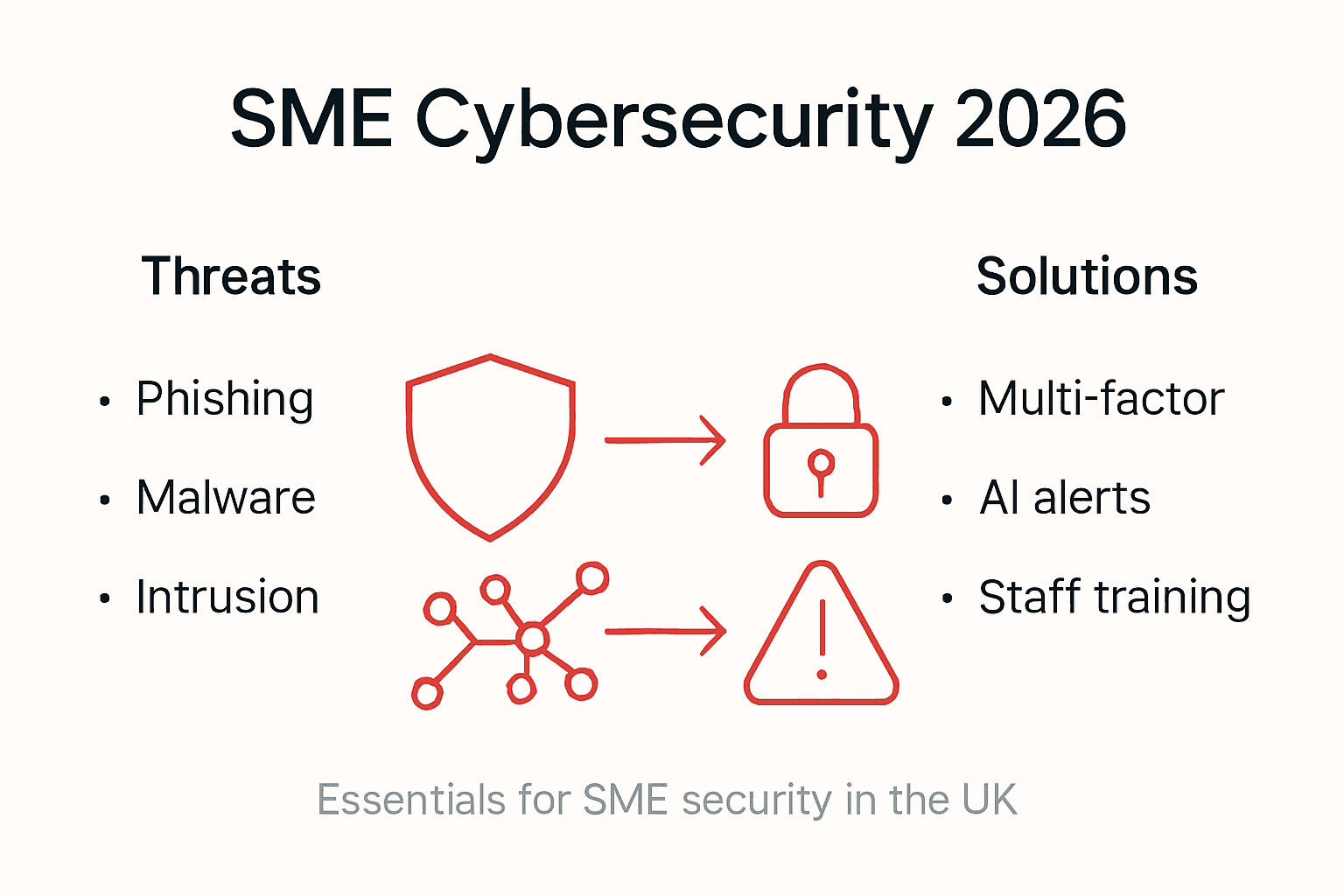
Implementing comprehensive security frameworks requires a holistic approach that addresses technological, procedural, and human elements. Secure software development practices play a critical role in preventing vulnerabilities, emphasising secure coding standards, regular vulnerability assessments, and proactive patch management strategies. SMEs must integrate continuous monitoring systems, implement zero-trust security architectures, and develop incident response protocols that enable rapid detection, containment, and remediation of potential cybersecurity incidents.
Pro tip: Conduct monthly penetration testing and vulnerability assessments to identify and address potential security weaknesses before they can be exploited by malicious actors.
Legal, Regulatory, and Compliance Obligations
Navigating the complex landscape of legal and regulatory requirements is fundamental for UK SMEs seeking to establish robust cybersecurity frameworks. The General Data Protection Regulation (GDPR) and the Network and Information Systems (NIS) Regulations create comprehensive legal obligations that demand meticulous attention to data protection, privacy, and digital security standards. Preventing reputational damage requires a proactive approach to understanding and implementing these critical regulatory requirements.
SMEs must develop comprehensive compliance strategies that address multiple regulatory domains. This involves implementing rigorous data protection mechanisms, maintaining detailed documentation of cybersecurity processes, and establishing transparent reporting protocols for potential security incidents. Key compliance requirements include conducting regular risk assessments, maintaining comprehensive data processing records, ensuring appropriate data encryption, and developing robust incident response and notification procedures that align with statutory reporting timelines.
The legal landscape demands that organisations demonstrate active cybersecurity governance, which extends beyond mere technical implementations. This requires creating formal cybersecurity policies, conducting regular staff training programmes, implementing strict access control mechanisms, and maintaining comprehensive audit trails. SMEs must also ensure they have appropriate consent mechanisms for data processing, implement privacy-by-design principles, and develop transparent data management strategies that protect both organisational and individual interests.
Below is a summary of key UK cybersecurity compliance requirements and their business importance:
| Regulation/Practice | SME Obligation | Business Benefit |
|---|---|---|
| General Data Protection (GDPR) | Protect and manage personal data | Avoid fines, maintain trust |
| NIS Regulations | Secure critical IT systems | Ensure operational resilience |
| Regular Risk Assessments | Identify security weaknesses | Reduce breach probability |
| Staff Cybersecurity Training | Increase workforce awareness | Prevent human error incidents |
Pro tip: Engage a specialised legal consultant to conduct an annual comprehensive review of your cybersecurity compliance framework, ensuring alignment with the latest regulatory requirements and industry best practices.
Business Risks and Costs of Inadequate Security
Cyber attacks resulting in substantial financial losses have become an increasingly devastating reality for UK small and medium enterprises. Beyond immediate monetary damages, inadequate cybersecurity can trigger catastrophic consequences that extend far beyond initial breach events. The financial impact encompasses direct costs like ransom payments and system restoration, alongside indirect expenses related to operational disruption, reputational damage, and potential legal liabilities.
The comprehensive financial burden of cybersecurity breaches involves multiple complex dimensions. Immediate expenses include forensic investigations, system recovery, potential ransom payments, and emergency technological interventions. Longer-term costs emerge through lost business opportunities, diminished customer trust, potential regulatory fines, and the substantial resources required to rebuild organisational reputation and credibility following a significant security incident.
Beyond financial implications, inadequate security creates profound operational risks that can fundamentally compromise business continuity. Cyber incidents can result in extended system downtime, disrupted supply chains, compromised customer data, and potential legal challenges that drain organisational resources. SMEs without robust cybersecurity measures risk experiencing catastrophic operational interruptions that could potentially threaten their entire business model and market positioning.
Pro tip: Develop a comprehensive cyber insurance policy that covers both direct financial losses and potential reputational damage to provide a robust financial safety net for your organisation.
Strengthen Your SME Security with Expert IT Solutions from Cloudology.uk
Small and Medium Enterprises in the United Kingdom face growing cyber threats such as phishing, impersonation attacks, and ransomware that can jeopardise operations and reputation. The article highlights the critical need for multi-layered cybersecurity strategies including regular training, up-to-date risk assessments, and proactive incident response protocols. At the heart of these strategies is the demand for expert technological support alongside workforce awareness to build a resilient defence posture.
Cloudology.uk specialises in delivering just that comprehensive protection tailored for SMEs. Our IT support services simplify your technology management while fortifying your network with advanced security measures. From robust cloud hosting and secure data backup solutions to implementing cutting-edge network security frameworks, we help you mitigate risks and safeguard critical business assets. Do not wait for the next breach or costly downtime. Visit Cloudology.uk today to explore how our solutions empower your organisation to stay secure and productive in an evolving digital landscape.
Frequently Asked Questions
What are the common cyber threats facing SMEs?
Common cyber threats for SMEs include phishing attacks, impersonation attacks, malware, ransomware, and network intrusions. These threats typically exploit vulnerabilities in human behaviour and technological infrastructures.
How can SMEs improve their cybersecurity posture?
SMEs can improve their cybersecurity by implementing multi-layered security approaches, conducting regular employee training, utilising advanced threat detection systems, and establishing comprehensive incident response protocols.
What legal obligations do SMEs have regarding cybersecurity?
SMEs are required to comply with regulations like the General Data Protection Regulation (GDPR) and the Network and Information Systems (NIS) Regulations. This includes protecting personal data, maintaining cybersecurity protocols, and conducting regular risk assessments.
What are the financial risks of inadequate cybersecurity for SMEs?
Inadequate cybersecurity can lead to substantial financial losses, including direct costs like ransom payments and system recovery, as well as indirect costs such as reputational damage and lost business opportunities.