

Managing digital infrastructure can feel overwhelming for IT managers facing constant demands for efficiency and security. Advanced IT Support is now recognised across the United Kingdom as more than troubleshooting systems. It is a strategic asset that helps small and medium enterprises reduce downtime, protect against threats, and drive technological progress. This article explains how robust IT Support solutions transform business operations, safeguard your organisation, and position your team for long-term digital success.
Table of Contents
- Defining IT Support for UK Businesses
- Types of IT Support Services Available
- How IT Support Enhances SME Operations
- Responsibilities and Strategic Role of IT Teams
- Risks, Compliance, and Cost Implications
Key Takeaways
| Point | Details |
|---|---|
| Strategic Role of IT Support | IT Support has evolved into a strategic partnership for businesses, focusing on proactive solutions and technology management beyond mere troubleshooting. |
| Diverse IT Service Types | A wide range of specialised IT support services is available, including reactive and proactive options to meet complex business needs. |
| Enhancement of SME Operations | Comprehensive IT support significantly improves operational efficiency, risk management, and strategic alignment with business goals for SMEs. |
| Importance of IT Team Collaboration | Developing a collaborative relationship with IT teams is crucial, as they now play key roles in driving innovation and supporting organisational objectives. |
Defining IT Support for UK Businesses
IT Support represents a comprehensive technology management service critical for modern businesses, encompassing far more than simple technical troubleshooting. In the United Kingdom, IT Support has evolved into a strategic partnership that enables organisations to leverage technology effectively and maintain operational resilience. Comprehensive IT infrastructure management now involves proactively monitoring systems, preventing potential disruptions, and ensuring seamless technological performance.
For small and medium enterprises (SMEs), IT Support serves as a crucial backbone, delivering technical expertise that maintains technological infrastructure, resolves system complications, and provides strategic technological guidance. The modern IT Support landscape in the UK goes beyond reactive problem-solving, focusing instead on creating robust, secure, and efficient digital environments that empower businesses to compete effectively. Specialised support services now include cloud management, cybersecurity monitoring, network optimisation, and strategic technology consulting.
Typical IT Support services for UK businesses generally include:
- Hardware and software maintenance
- Network infrastructure management
- Cybersecurity protection
- Cloud service integration
- Technical helpdesk and user support
- Technology strategy and consulting
Pro tip: When selecting an IT Support provider, prioritise partners who demonstrate proactive monitoring capabilities and offer flexible, scalable solutions tailored to your specific business needs.
Types of IT Support Services Available
IT Support services have diversified significantly, offering businesses a range of specialised solutions designed to address complex technological challenges. Examples of key IT support services range from foundational technical assistance to advanced strategic technological management, enabling organisations to maintain robust and efficient digital infrastructures.
The primary categories of IT Support services can be comprehensively classified into several critical domains. Reactive Support involves immediate troubleshooting and resolution of existing technical issues, providing rapid response to system failures, software malfunctions, and hardware problems. Proactive Support, by contrast, focuses on preventative measures, including regular system monitoring, scheduled maintenance, cybersecurity assessments, and strategic technology planning to minimise potential disruptions before they occur.
Detailed breakdown of IT Support service categories includes:
To understand which IT support service best fits specific business needs, see this comparison table:
| Service Type | Uses in Business | Best For | Example Benefit |
|---|---|---|---|
| On-Site Support | Immediate on-premise fixes | Complex hardware cases | Quick device recovery |
| Remote Support | Virtual troubleshooting | Distributed teams | Faster response times |
| Managed IT Services | Full outsourcing and planning | Growing organisations | Predictable tech costs |
| Cloud Support | Cloud migration and support | Flexible operations | Improved mobility |
| Cybersecurity Services | Security monitoring | Regulated industries | Reduced data breaches |
| Network Management | Network setup and upgrades | Offices/Multi-sites | Reliable connectivity |
- On-Site Support: Direct technical intervention at business premises
- Remote Support: Technical assistance delivered through digital communication channels
- Managed IT Services: Comprehensive technology management and strategic consulting
- Cloud Support: Specialised assistance with cloud infrastructure and migration
- Cybersecurity Services: Protection, monitoring, and threat mitigation
- Network Management: Infrastructure design, implementation, and maintenance
Pro tip: Prioritise IT Support providers offering flexible, scalable services that can adapt to your business’s evolving technological requirements and provide a holistic approach to digital infrastructure management.
How IT Support Enhances SME Operations
Small and medium enterprises face increasingly complex technological challenges that demand sophisticated support strategies. Comprehensive IT support solutions play a crucial role in transforming operational efficiency, enabling businesses to navigate digital complexities with confidence and strategic precision. By providing continuous technological management, IT support helps SMEs maintain competitive edges in rapidly evolving market environments.

The primary mechanisms through which IT support enhances SME operations include systematic risk mitigation, operational continuity, and strategic technological integration. Technological Resilience emerges as a key benefit, with professional IT support preventing potential system failures, minimising downtime, and ensuring robust cybersecurity protocols. This approach allows business leaders to focus on core strategic objectives rather than getting bogged down in technical complications, effectively converting potential technological challenges into streamlined operational advantages.
Specific operational enhancements provided by professional IT support include:
This table summarises how professional IT support can directly influence SME performance factors:
| Enhancement Area | Impact on SME Operations | Example Outcome |
|---|---|---|
| Risk Mitigation | Reduces exposure to threats | Fewer cyber incidents |
| Operational Continuity | Ensures systems stay online | Less business downtime |
| Strategic Integration | Aligns IT with goals | Faster digital adoption |
| Cost Efficiency | Controls technology spend | Lower long-term expenses |
| Scalable Solutions | Grows with the business | Seamless expansions |
- Rapid problem resolution and technical troubleshooting
- Proactive system monitoring and maintenance
- Strategic technology planning and implementation
- Cybersecurity risk management
- Cost-effective technology infrastructure development
- Scalable support solutions adaptable to business growth
Pro tip: Invest in IT support services that offer flexible, scalable solutions and demonstrate a clear understanding of your specific business technology requirements.
Responsibilities and Strategic Role of IT Teams
IT teams have transcended their traditional technical support roles, evolving into critical strategic partners that drive organisational innovation and resilience. IT professionals’ expanding responsibilities now encompass far more than technical maintenance, involving strategic technology alignment, digital transformation, and proactive business enablement.
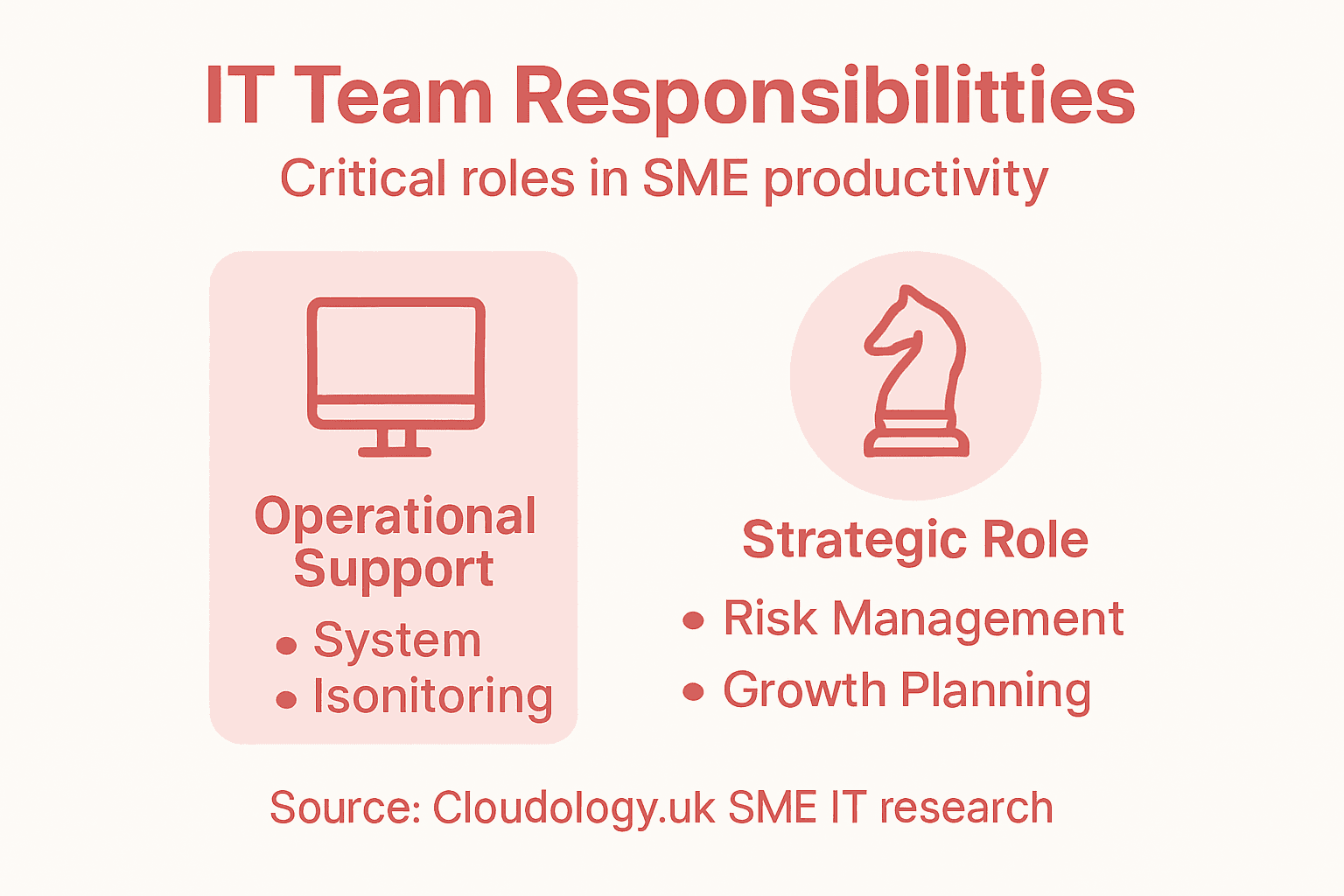
The multifaceted Strategic Responsibilities of modern IT teams include comprehensive technological governance, risk management, and organisational innovation. Beyond maintaining infrastructure and resolving technical issues, IT professionals are now expected to develop forward-looking technology strategies that directly support business objectives. This strategic approach involves continuous assessment of emerging technologies, identifying opportunities for digital transformation, and creating robust technological frameworks that enhance operational efficiency and competitive positioning.
Key responsibilities of contemporary IT teams include:
- Infrastructure design and management
- Cybersecurity implementation and monitoring
- Digital transformation strategy development
- Technology procurement and vendor management
- Compliance and regulatory technology adherence
- Business process optimization through technological solutions
- Continuous skills development and technology trend analysis
Pro tip: Develop a collaborative relationship with your IT team, viewing them as strategic partners who can unlock technological potential rather than merely technical support providers.
Risks, Compliance, and Cost Implications
Navigating the complex landscape of technological risks and compliance represents a critical challenge for contemporary UK businesses. Government cybersecurity strategies highlight the increasing importance of proactive risk management and strategic technological governance, emphasising that businesses must develop comprehensive approaches to mitigate potential digital vulnerabilities.
The Financial and Regulatory Landscape surrounding IT support involves intricate considerations of risk mitigation, data protection, and regulatory compliance. Small and medium enterprises face significant potential financial implications from cybersecurity incidents, with potential costs including direct financial losses, reputational damage, legal penalties, and operational disruptions. Comprehensive IT support strategies must therefore balance robust security measures with cost-effective implementation, ensuring businesses can protect their digital assets without incurring unsustainable expenses.
Key risk and compliance considerations for SMEs include:
- Data protection and privacy regulations
- Cybersecurity threat mitigation
- Information security standards compliance
- Risk assessment and management protocols
- Regulatory reporting requirements
- Technology infrastructure security
- Incident response and business continuity planning
Pro tip: Conduct regular comprehensive risk assessments and invest in adaptable IT support solutions that can evolve alongside your business’s changing technological landscape.
Unlock Your SME’s Potential with Expert IT Support
The article “Role of IT Support – Transforming SME Productivity” highlights how strategic IT management can drastically reduce risks, ensure operational continuity, and drive scalable growth. If your business faces challenges such as preventing cyber threats, managing increasing technology costs, or aligning IT infrastructure with business goals, you are not alone. Many SMEs struggle with maintaining technological resilience while focusing on core activities. Terms like “proactive system monitoring” and “strategic technology planning” are key concepts that underscore the importance of partnering with a reliable IT support provider.
At Cloudology.uk, we specialise in delivering comprehensive IT services tailored to meet the evolving needs of small and medium enterprises. From cloud hosting and secure data backup to scalable network management, our solutions empower your business to overcome technical obstacles and stay competitive. To explore how professional IT support can transform your operations, visit our Uncategorized Archives – Cloudology for insights and service details. Ready to secure your technology future and enhance productivity with a trusted partner? Discover more about our full service range and get started today at Cloudology.uk.
Frequently Asked Questions
What is the primary role of IT support for SMEs?
IT support for SMEs encompasses managing technology infrastructure, troubleshooting technical issues, and providing strategic advice to enhance overall business efficiency and productivity.
How does IT support enhance productivity in small and medium enterprises?
IT support enhances productivity by minimising downtime through proactive system monitoring, ensuring effective cybersecurity measures, and optimising technology resources to align with business goals.
What types of IT support services should SMEs consider?
SMEs should consider a range of IT support services, including on-site support, remote support, managed IT services, cybersecurity services, and cloud support to meet their specific technological needs.
Why is proactive IT support important for SMEs?
Proactive IT support is crucial as it focuses on preventing issues before they arise, ensuring system resilience, maintaining operational continuity, and allowing businesses to focus on strategic objectives rather than technical complications.