

Every IT manager knows the frustration of dropped connections or sluggish cloud access when deadlines loom. In a fast-moving United Kingdom market, reliable and secure digital infrastructure is now the backbone for small and medium businesses aiming to sharpen efficiency and protect vital data. This guide clarifies what upgraded internet connectivity really means for British SMEs and how choosing the right solution can transform daily operations while strengthening cyber defences.
Table of Contents
- Defining Upgraded Internet Connectivity
- Types Of Business Connectivity Solutions
- Key Benefits For Productivity And Growth
- Security And Compliance Considerations
- Cost Implications And Investment Planning
Key Takeaways
| Point | Details |
|---|---|
| Upgraded Internet Connectivity | Essential for UK SMEs to enhance digital infrastructure, enabling improved efficiency and competitiveness in a tech-driven market. |
| Diverse Connectivity Solutions | SMEs should consider various options, including broadband, leased lines, and wireless technologies, tailored to their specific operational needs. |
| Productivity Enhancement | Upgrading connectivity can significantly boost operational efficiency and enable the leveraging of advanced technologies for sustained growth. |
| Security and Compliance | A holistic approach to cybersecurity and adherence to regulations is vital when upgrading connectivity to protect sensitive data and ensure business resilience. |
Defining upgraded internet connectivity
Upgraded internet connectivity represents more than simply increasing internet speeds for UK small and medium enterprises (SMEs). It encompasses a comprehensive transformation of digital infrastructure that enables businesses to operate more efficiently and compete effectively in today’s technology-driven marketplace. The UK government recognises this critical need, highlighting that digital infrastructure is fundamental to SME growth.
At its core, upgraded internet connectivity involves implementing advanced networking technologies that provide faster, more reliable, and more secure internet access. These enhancements typically include higher bandwidth capacities, improved network resilience, reduced latency, and enhanced security protocols. For SMEs, this means the ability to leverage cloud services, support remote working, facilitate seamless communication, and handle increasingly data-intensive business applications without performance bottlenecks.
The National Connectivity Alliance emphasises that upgraded connectivity is not just about speed, but about creating a robust digital ecosystem that supports scalable business operations. This includes implementing technologies like fibre-optic networks, dedicated business broadband, symmetrical upload and download speeds, and advanced network management tools. Such infrastructure enables SMEs to support critical business technologies across communication, collaboration, customer relationship management, and operational platforms.
Pro tip: When exploring upgraded internet connectivity, request detailed service level agreements that specify not just speed, but also uptime guarantees, technical support responsiveness, and scalability options.
Types of business connectivity solutions
Businesses in the United Kingdom have access to a diverse range of connectivity solutions, each designed to meet specific operational requirements and technological needs. Connectivity technologies have evolved significantly, offering SMEs multiple options to enhance their digital infrastructure and support business growth.
The primary business connectivity solutions include broadband, leased lines, Ethernet services, and wireless technologies. Broadband services provide cost-effective internet access through standard telephone lines or cable networks, suitable for smaller businesses with moderate bandwidth requirements. Leased lines offer dedicated, symmetrical internet connections with guaranteed speeds and superior reliability, ideal for organisations requiring consistent, high-performance connectivity. Ethernet services provide advanced networking capabilities, enabling businesses to create robust, scalable network infrastructures that can connect multiple business locations.
Wireless connectivity solutions have become increasingly sophisticated, with mobile network technologies like 4G and 5G offering flexible and high-speed alternatives to traditional fixed-line connections. These wireless solutions provide businesses with backup connectivity options, support remote working, and enable mobile workforce strategies. Modern 5G technologies, in particular, deliver exceptional speed, lower latency, and higher device capacity, making them increasingly attractive for businesses seeking dynamic and adaptive connectivity solutions.
Pro tip: When selecting a connectivity solution, evaluate not just current bandwidth needs but potential future scaling requirements to ensure your chosen infrastructure can support long-term business growth.
The following table summarises the main business connectivity solutions available to UK SMEs and their typical applications:
| Connectivity Solution | Ideal Business Profile | Main Advantages |
|---|---|---|
| Broadband | Small businesses with basic needs | Low cost, simple setup |
| Leased Line | Medium enterprises requiring reliability | Guaranteed speed, dedicated access |
| Ethernet Services | Multi-site organisations | High scalability, robust networking |
| Wireless (4G/5G) | Mobile or remote workforces | Flexible access, rapid deployment |
Key benefits for productivity and growth
Upgrading internet connectivity offers transformative advantages for UK small and medium enterprises, enabling them to compete more effectively in an increasingly digital marketplace. Digital adoption significantly boosts SME productivity, providing businesses with strategic capabilities that were previously unavailable to smaller organisations.
The primary productivity benefits include enhanced operational efficiency, improved communication channels, and expanded market reach. Streamlined operations become possible through cloud-based tools, allowing real-time collaboration, faster decision-making, and reduced administrative overhead. Businesses can integrate sophisticated software solutions, automate routine tasks, and create more agile working environments that respond quickly to changing market demands. These technological capabilities enable SMEs to compete with larger corporations by leveraging scalable, cost-effective digital infrastructure.
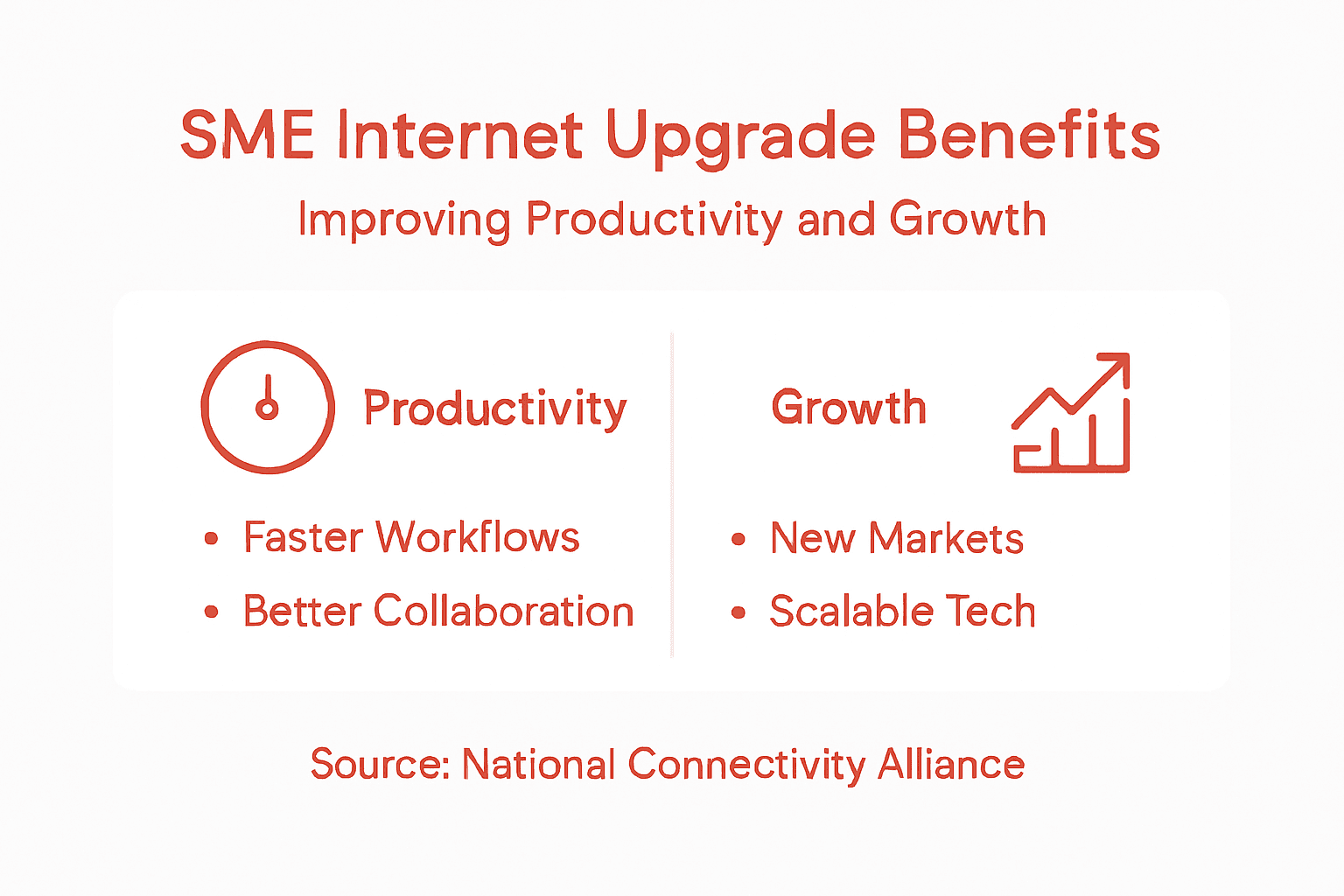
Moreover, enhanced connectivity supports innovative business strategies that drive sustainable growth. Advanced internet solutions facilitate hybrid working models, support emerging technologies like artificial intelligence and machine learning, and provide robust platforms for customer engagement. By investing in sophisticated connectivity, businesses can access global markets, implement advanced data analytics, and create more personalised customer experiences that differentiate them from competitors.
Pro tip: Conduct a comprehensive audit of your current internet infrastructure, identifying potential bottlenecks and mapping out specific productivity improvements that upgraded connectivity could deliver for your unique business requirements.
Security and compliance considerations
Upgrading internet connectivity for UK SMEs demands a comprehensive approach to cybersecurity and regulatory compliance. Protecting personal data remains a critical priority for businesses, requiring robust security measures that go beyond basic technological implementations. Enterprises must develop sophisticated strategies that address both technological vulnerabilities and legal requirements.

The core security considerations involve multiple interconnected layers of protection. Network encryption serves as the fundamental defence mechanism, preventing unauthorized access and protecting sensitive business information. Businesses need to implement advanced firewalls, multi-factor authentication protocols, and regular security audits to maintain comprehensive protection. These measures help mitigate risks such as data breaches, cyber attacks, and potential financial losses that could arise from inadequate security infrastructure.
Compliance with regulatory standards is equally crucial for UK businesses. Cyber resilience requires proactive risk management that aligns with national cybersecurity frameworks like Cyber Essentials and UK GDPR requirements. This involves developing comprehensive incident response plans, conducting regular staff training on security protocols, and maintaining detailed documentation of data handling practices. SMEs must also stay informed about evolving regulatory landscapes, ensuring their connectivity upgrades not only enhance operational capabilities but also maintain strict adherence to legal standards.
Pro tip: Create a dedicated cybersecurity policy document that outlines specific protocols for data protection, regular security assessments, and employee training requirements to maintain robust compliance and protection.
Cost implications and investment planning
Navigating the financial landscape of internet connectivity upgrades requires strategic planning and a comprehensive understanding of both short-term expenses and long-term value. Government support for SME digital investments provides critical frameworks to help businesses manage these financial considerations effectively.
The investment typically involves several key cost components, including initial infrastructure setup, hardware and software procurement, ongoing maintenance, and potential staff training. Upfront capital expenditure can seem substantial, with costs varying depending on the complexity of the connectivity solution and specific business requirements. However, businesses should view these expenses as strategic investments rather than mere operational costs. Advanced connectivity solutions can deliver significant returns through improved operational efficiency, reduced downtime, enhanced productivity, and expanded market capabilities.
Here is a quick guide to common costs and investment strategies for upgrading business internet infrastructure:
| Cost Component | Typical Considerations | Long-Term Value |
|---|---|---|
| Infrastructure Setup | Installation fees, cabling, licences | Supports future growth |
| Hardware & Software | Routers, switches, security tools | Improved reliability |
| Maintenance & Support | Ongoing service, technical upgrades | Minimises downtime |
| Staff Training | Educating employees on new systems | Maximises solution use |
Strategic investment planning remains crucial for SME growth, necessitating a phased approach to digital infrastructure upgrades. Businesses should consider implementing connectivity improvements in stages, allowing for incremental investment and ongoing assessment of technological benefits. This approach enables SMEs to manage financial risks while progressively enhancing their digital capabilities. Potential funding sources include government grants, technology investment loans, and strategic partnerships that can help distribute initial financial burdens.
Pro tip: Conduct a comprehensive cost-benefit analysis that includes not just direct technological expenses, but also potential productivity gains, reduced operational inefficiencies, and potential new revenue streams enabled by upgraded connectivity.
Unlock the Full Potential of Upgraded Internet Connectivity for Your SME
UK SMEs face growing challenges in keeping pace with digital transformation requirements as they strive for reliable, secure, and scalable internet access. This article highlights critical pain points such as the need for high bandwidth, low latency, and robust cybersecurity measures to support cloud services, remote working, and agile business operations. At Cloudology.uk, we understand that merely increasing internet speeds is not enough — your business needs a complete digital ecosystem designed to boost productivity and safeguard compliance.
Discover tailored IT solutions that tackle your connectivity challenges head-on. From dedicated business broadband and advanced network management to cloud hosting and VoIP telephony, our comprehensive offerings simplify IT management while delivering consistent performance and protection. Explore practical strategies and case studies to see how your SME can benefit from modern connectivity upgrades across our Uncategorized Archives – Cloudology.
Ready to transform your digital infrastructure today Stay ahead of competition with expert guidance and scalable technology by visiting Cloudology.uk. Contact our team now to start building a resilient, future-proof IT environment that truly supports your business growth.
Frequently Asked Questions
What are the benefits of upgrading internet connectivity for SMEs?
Upgrading internet connectivity enhances operational efficiency, improves communication channels, and expands market reach. It enables SMEs to leverage cloud services, support remote working, and handle data-intensive applications without performance bottlenecks.
What types of connectivity solutions are available for SMEs?
SMEs can choose from various connectivity solutions, including broadband, leased lines, Ethernet services, and wireless technologies. Each option caters to specific operational needs, offering different speeds, reliability, and scalability.
How can upgraded internet connectivity support my business’s security?
Upgraded connectivity requires a comprehensive approach to cybersecurity, including network encryption, advanced firewalls, and regular security audits. These measures help protect sensitive data and comply with regulatory standards.
What should I consider when planning an investment in upgraded internet connectivity?
When planning an investment, consider upfront costs, ongoing maintenance, and potential staff training. Conducting a cost-benefit analysis will help you evaluate the long-term value of improved connectivity in terms of productivity gains and market capabilities.
Recommended
- Staying Competitive: Why Businesses Must Invest in High-Quality Internet Solutions – Cloudology
- Role of Cloud in Business – Enabling UK SME Growth
- Maximising Efficiency: The Impact of Reliable Connectivity on Business Operations – Cloudology
- Why Invest in Cloud Telephony for UK SMEs
- 7 Common Security Vulnerabilities Every UK SME Must Know