

Many growing British businesses worry that switching to internet calls will mean dropped lines, poor quality, or headaches for IT teams. For IT managers navigating limited budgets and rising expectations, understanding VoIP technology’s true capabilities is crucial. This guide clears up common misconceptions and explains the clear advantages and real-world limitations, helping you identify the best route for your company’s communications upgrade.
Table of Contents
- VoIP Defined and Common Misconceptions
- Types of VoIP Systems for Small Businesses
- How VoIP Works and Key Features
- Cost, Compliance, and Security Considerations
- Risks, Limitations, and Alternative Options
Key Takeaways
| Point | Details |
|---|---|
| Understanding VoIP | VoIP provides flexible and cost-effective communication solutions, transforming voice into digital data transmitted over the internet. |
| Common Misconceptions | Many small and medium enterprises mistakenly believe that VoIP is unreliable or requires extensive technical know-how. |
| Choosing the Right System | Businesses can choose from on-premise, cloud-hosted, or hybrid VoIP systems, each catering to different needs and scalability. |
| Security and Compliance | Implementing VoIP necessitates stringent security measures and adherence to data protection regulations like GDPR to protect sensitive information. |
VoIP Defined and Common Misconceptions
VoIP (Voice over Internet Protocol) represents a revolutionary communication technology that transforms how businesses transmit voice communications through internet networks instead of traditional telephone lines. At its core, VoIP converts voice signals into digital data packets, enabling organisations to make calls using broadband internet connections rather than analogue phone systems.
Many UK small and medium enterprises misunderstand VoIP’s capabilities, believing it to be unreliable or complicated. However, VoIP telephony fundamentally changes business communication by offering flexible, cost-effective communication solutions. Unlike traditional phone systems, VoIP allows businesses to integrate voice, video, and messaging services seamlessly across multiple devices and locations.
Common misconceptions about VoIP persist among business leaders. Some believe VoIP requires extensive technical knowledge or delivers poor call quality. In reality, modern VoIP systems provide crystal-clear audio, robust security features, and straightforward setup processes. The technology supports advanced features like call routing, voicemail-to-email transcription, and comprehensive analytics that traditional phone systems cannot match.
Pro tip: Before implementing VoIP, conduct a thorough network assessment to ensure your internet infrastructure can support high-quality voice communications and minimise potential performance issues.
Types of VoIP Systems for Small Businesses
UK small businesses have several VoIP system options to choose from, each designed to meet specific organisational communication needs. The primary categories include on-premise PBX systems, cloud-hosted PBX systems, and hybrid solutions, which offer varying levels of control, scalability, and investment requirements. Selecting the right VoIP system depends on understanding the unique characteristics of each approach.
On-premise PBX systems represent a traditional approach where businesses maintain their communication infrastructure physically at their location. These systems provide maximum control and customisation but require significant upfront hardware investments and ongoing technical maintenance. In contrast, cloud-hosted PBX systems eliminate hardware complexities by delivering communication services through internet-based platforms, offering greater flexibility and reduced capital expenditure for small enterprises preparing for the 2027 PSTN switch-off.
Hybrid VoIP solutions bridge the gap between traditional telephony and modern digital communication technologies. They allow businesses to gradually transition their communication infrastructure, integrating existing analogue systems with newer internet-based technologies. This approach is particularly beneficial for organisations with legacy equipment or complex communication requirements that cannot immediately shift to a fully cloud-based system.
Here is a comparison of common types of VoIP systems suited for UK small businesses:
| System Type | Control Level | Upfront Cost | Scalability |
|---|---|---|---|
| On-premise PBX | Maximum | High | Limited by hardware |
| Cloud-hosted PBX | Moderate to Low | Low | Highly flexible |
| Hybrid Solution | Customisable | Medium | Gradual expansion |
Pro tip: Conduct a comprehensive audit of your current communication infrastructure and future growth projections before selecting a VoIP system to ensure the most cost-effective and scalable solution.
How VoIP Works and Key Features
VoIP technology transforms communication by converting voice into digital data packets transmitted seamlessly over internet networks. Voice communication technology operates through a sophisticated process where analogue sound waves are transformed into digital signals, compressed, and transmitted across broadband connections. This digital conversion allows businesses to make voice calls using internet protocols instead of traditional telephone lines, offering unprecedented flexibility and efficiency.

The technical mechanism involves several critical steps. When a user speaks into a VoIP-enabled device, their voice is immediately converted into digital data packets. These packets are then routed through internet infrastructure, reassembled at the recipient’s end, and reconverted back into sound. Unlike traditional telephony, VoIP can integrate multiple communication channels, enabling businesses to combine voice, video, messaging, and collaborative tools within a single platform.
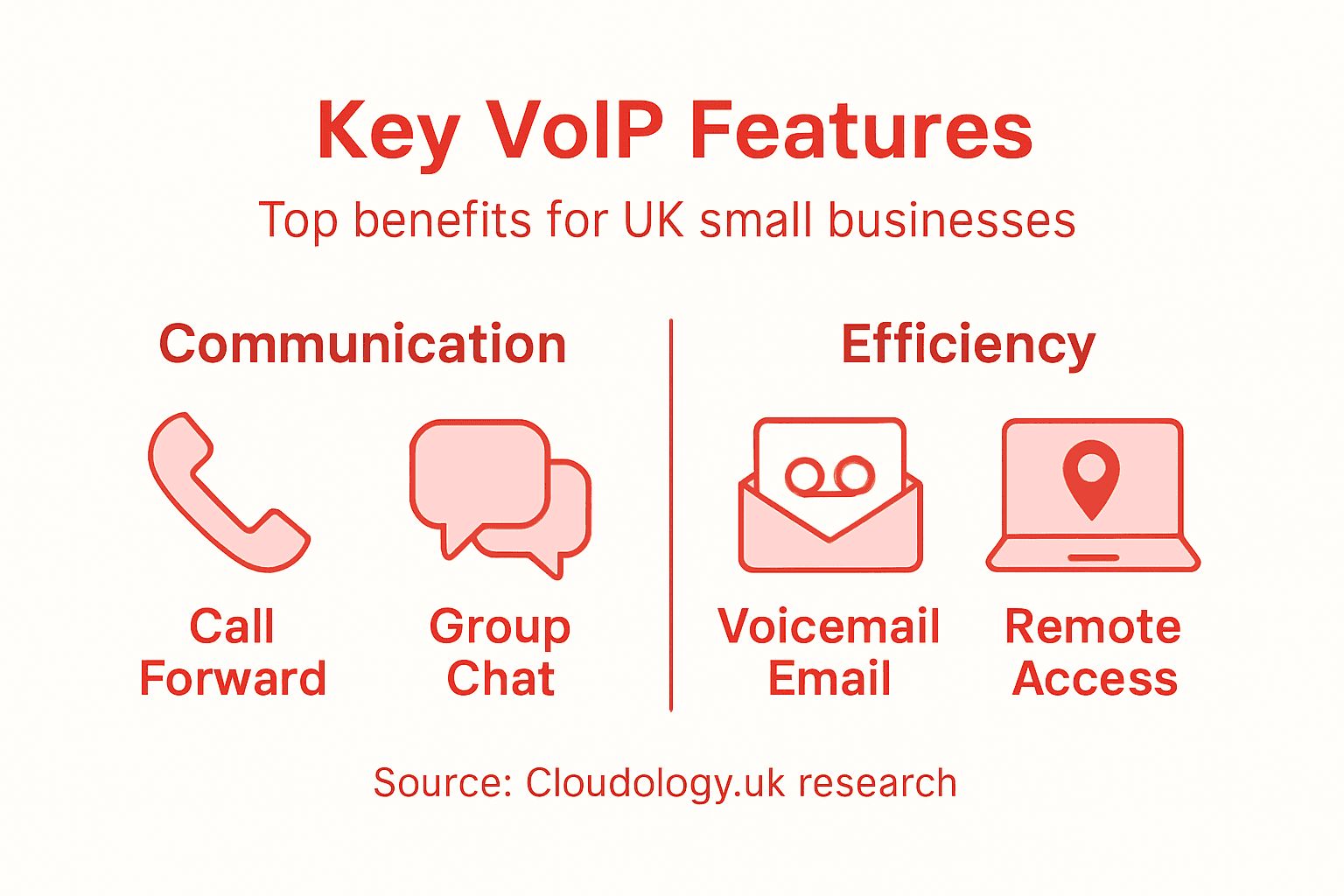
Key features that make VoIP particularly attractive for UK small and medium enterprises include advanced communication capabilities. These encompass automatic call forwarding, voicemail-to-email transcription, call recording, interactive voice response systems, and sophisticated analytics tracking communication patterns. Moreover, VoIP supports remote and hybrid work arrangements by allowing employees to connect from multiple devices and locations, effectively breaking down traditional communication barriers.
Pro tip: Conduct a thorough bandwidth assessment of your internet connection before implementing VoIP to ensure optimal call quality and prevent potential communication disruptions.
Cost, Compliance, and Security Considerations
VoIP technology introduces a complex landscape of financial, regulatory, and security considerations for UK small and medium enterprises. Regular security assessments become critical when implementing internet-based communication systems that transmit sensitive business data across digital networks. The financial implications of VoIP extend beyond initial implementation costs, encompassing ongoing maintenance, potential infrastructure upgrades, and long-term operational efficiency.
Compliance represents a significant concern for businesses adopting VoIP technologies. UK enterprises must navigate stringent data protection regulations, including GDPR requirements and telecommunications security standards. This involves ensuring encryption protocols protect voice communications, maintaining robust access controls, and implementing comprehensive data handling procedures that safeguard both business and customer information. Organisations must also consider potential vulnerabilities in internet-based communication systems, developing comprehensive risk management strategies to mitigate potential security breaches.
The economic benefits of VoIP can be substantial when carefully managed. By consolidating communication infrastructure, businesses can reduce hardware expenses, minimise telecommunications costs, and create more flexible working environments. However, these advantages must be balanced against potential cybersecurity risks. Investing in high-quality security measures, regular system updates, and employee training becomes essential to protect against potential digital threats and ensure uninterrupted, secure business communications.
For quick reference, here are regulatory and security priorities when adopting VoIP:
| Consideration | Why It Matters | Best Practice |
|---|---|---|
| Data Encryption | Protects sensitive calls | Use strong encryption methods |
| GDPR Compliance | Legal requirement in the UK | Regular compliance checks |
| Cyber Threats | Prevents business disruption | Train staff, update systems |
Pro tip: Conduct a comprehensive cybersecurity audit before implementing VoIP and establish clear communication protocol guidelines to minimise potential vulnerabilities.
Risks, Limitations, and Alternative Options
UK small and medium enterprises must carefully evaluate the potential risks and limitations associated with VoIP technology. VoIP provider selection requires a comprehensive understanding of potential vulnerabilities that could impact business communications. Primary risks include significant dependence on internet connectivity, potential service interruptions during network outages, and cybersecurity challenges that demand proactive management strategies.
The limitations of VoIP technology extend beyond simple connectivity concerns. Businesses must consider critical factors such as broadband quality, which directly influences call clarity and communication reliability. Emergency call handling presents another potential constraint, as VoIP systems may not always provide the same level of location tracking and immediate response capabilities as traditional telephone infrastructure. Additionally, organisations must invest in robust network infrastructure and implement comprehensive backup communication strategies to mitigate potential service disruptions.
Alternative communication options provide strategic flexibility for businesses navigating the complex telecommunications landscape. Hybrid systems that combine VoIP with traditional telephone lines offer a balanced approach, allowing gradual technological transition while maintaining communication continuity. SIP trunking represents another sophisticated alternative, enabling businesses with existing Private Branch Exchange (PBX) systems to modernise their communication infrastructure without complete system replacement. These alternatives allow organisations to strategically manage technological risks while progressively adopting more advanced communication technologies.
Pro tip: Develop a comprehensive communication continuity plan that includes multiple backup communication channels to ensure uninterrupted business operations during potential VoIP system disruptions.
Empower Your Business Communications with Expert VoIP Solutions
Understanding the challenges of integrating reliable and secure VoIP systems is crucial for UK SMEs aiming to modernise their communications. From concerns about call quality and technical complexity to ensuring GDPR compliance and network security, the journey to seamless VoIP adoption can feel overwhelming. This article highlights the importance of selecting scalable, cost-effective communication solutions that support flexible working environments while safeguarding sensitive business data.
At Cloudology.uk, we specialise in transforming these challenges into opportunities. Our professional IT services simplify VoIP deployment, combining cloud-hosted PBX flexibility with robust security measures tailored for small and medium enterprises. By choosing us as your technology partner, you gain access to comprehensive support designed to enhance productivity and ensure uninterrupted business communications. Explore our Uncategorized Archives – Cloudology for in-depth resources and insights.
Ready to future-proof your business with cutting-edge VoIP technology? Visit Cloudology.uk today to discover how our expert team can design and implement a communication infrastructure that drives your business forward. Don’t wait until the PSTN switch-off impacts your operations take action now and experience the peace of mind that comes with managed, secure, and scalable IT solutions.
Frequently Asked Questions
What is VoIP and how does it work for businesses?
VoIP, or Voice over Internet Protocol, enables businesses to make phone calls using internet connections instead of traditional phone lines. It converts voice signals into digital data packets, making communication more flexible and cost-effective.
What types of VoIP systems are available for small businesses?
There are three main types of VoIP systems for small businesses: on-premise PBX systems, cloud-hosted PBX systems, and hybrid solutions. Each offers a different level of control, scalability, and cost, allowing businesses to choose based on their specific communication needs.
What are the key benefits of using VoIP for business communication?
VoIP provides numerous benefits, including advanced features like call forwarding, voicemail-to-email transcription, and call recording. It supports multi-device connections, enhances remote work capabilities, and reduces overall telecommunications costs, leading to improved operational efficiency.
What security considerations should businesses keep in mind when using VoIP?
When implementing VoIP, businesses must ensure robust security measures, including data encryption and regular compliance with regulations like GDPR. Conducting cybersecurity audits and training staff on safe communication practices are also essential to mitigate potential risks.